Making my Commute Count
This post was written by Sustainable Transportation Associate, Malia Boksanski.
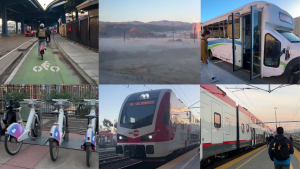
When I tell people I love my commute, they usually look at me like I’m joking. But I mean it. My daily journey from San Francisco to South San Francisco—biking on BayWheels bike share, hopping on Caltrain, then catching a free Commute.org shuttle—has become one of my favorite parts of the day. It’s a routine that keeps me moving, starts my day on a positive note, and connects me to my neighborhood in ways that sitting behind the wheel of a car never could.
I didn’t always think a commute could be something to enjoy. Like many, I assumed work meant getting in a car, sitting in traffic, and repeating the process at the end of the day. But after trying a more multi-modal approach, I realized how much better I feel when my commute doesn’t just mean idling in congestion. Instead, I get to bike through the city, get work done on Caltrain, and appreciate the convenience of a shuttle that gets me straight to my destination—all without the hassle of parking, the cost of gas, or the worry of traffic.
Not only am I personally benefitting from a sustainable commute, but looking at the bigger picture, I’m doing my part to reduce the impact transportation has on the environment. Transportation accounts for nearly 40% of greenhouse gas emissions in California, so making sustainable commute choices can have a real impact. But for me, the benefits go beyond the environmental aspect. I arrive at work feeling more energized and less stressed. My commute gives me time to listen to music and podcasts, enjoy the sights of the Bay, and even squeeze in some exercise. The cost savings don’t hurt either—between gas, tolls, parking, and other expenses, driving would be far more expensive than my current setup.
One of the biggest reasons my commute works so well is the support available through Commute.org, a San Mateo County agency that works to reduce vehicle miles traveled (VMT) by connecting commuters with resources, rewards, and information to commute sustainably. As a Sustainability Service Corps fellow at Commute.org, I’ve not only been able to promote these resources to community members, but I’ve been able to take advantage of them myself. In addition to riding Commute.org’s free shuttles, I received a Caltrain Go Pass through Commute.org’s Pass Forward Program, which connects low-income commuters who live or work in San Mateo County with free annual Caltrain Go Passes. These programs make it easy, affordable, and convenient to do your part in commuting sustainably.
Affordability plays a huge role in making sustainable commuting accessible. Many low-income commuters struggle with the high cost of transportation, but programs like Commute.org’s Pass Forward and BayWheels’ Bike Share for All, which provides low-cost bike share memberships and rides, help bridge that gap. By taking advantage of free and discounted resources, I’ve been able to commute sustainably without breaking the bank—something that’s especially important in a region where transportation costs can add up quickly.
If you’ve been considering a more sustainable commute, now is the perfect time to start. Commute.org’s annual Commuter Challenge, running from April to May, makes it fun and rewarding to swap solo car trips for biking, walking, carpooling, or public transit. By pledging to have a greener commute and logging your trips through the CommuteStar app, you’ll not only reduce your carbon footprint but also have the chance to win exciting grand prizes and weekly bonus rewards.
It’s easy to fall into the habit of driving alone, especially when it seems like the simplest option. But sometimes, stepping out of that routine can lead to something unexpectedly rewarding. If you’re curious about switching up your commute, the 2025 Commuter Challenge is the perfect excuse to give it a try. Who knows? You might even end up loving it, just like me.